


VW Typ 166 Schwimmwagen
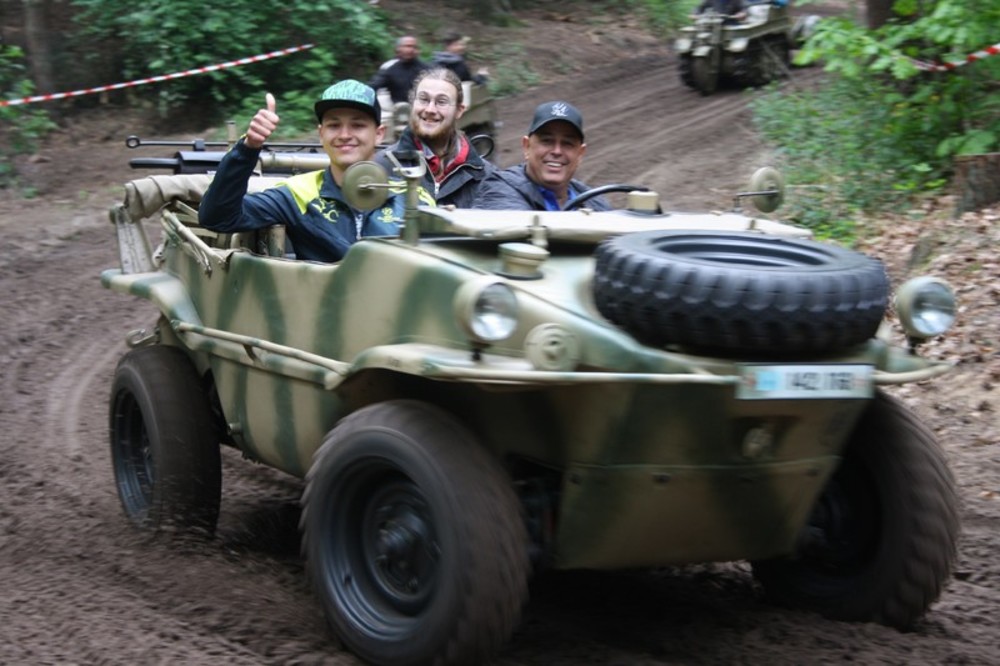
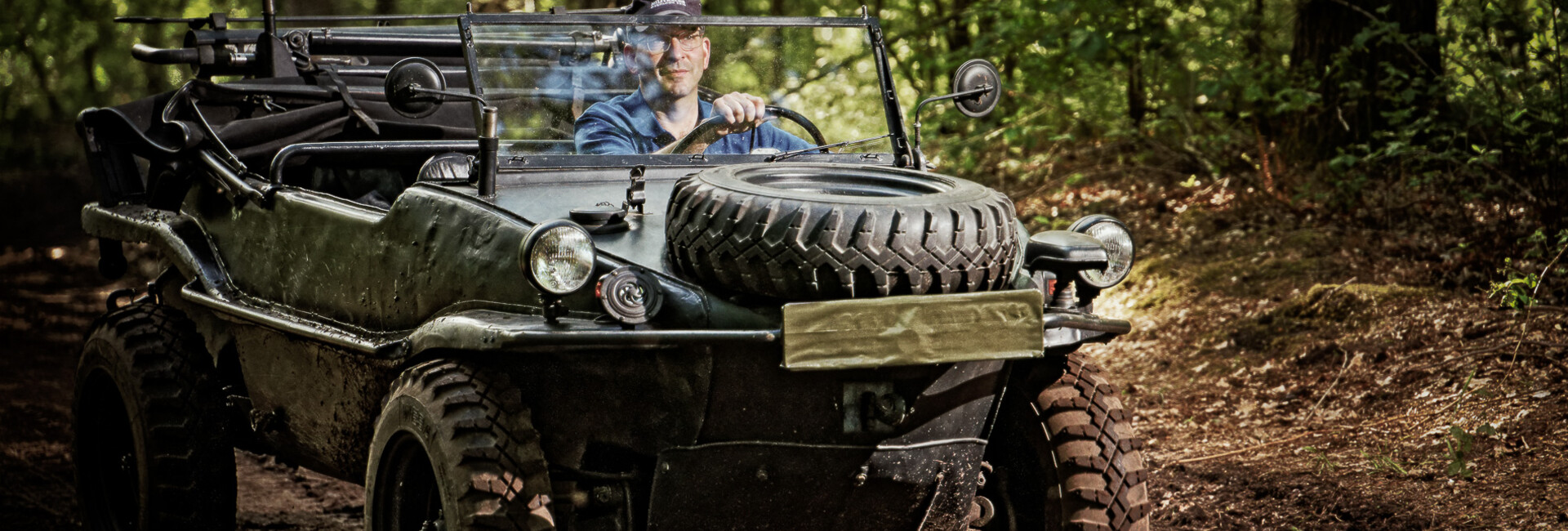
At Volkswagen (Fallersleben), the Typ 128 Schwimmwagen was initially built in 1941, but the model proved too heavy and insufficiently robust for frontline use. A more compact successor was therefore developed: the Typ 166 Schwimmwagen, an egg-shaped vehicle with a flat bottom, angled sides and a narrower front axle. The Typ 166 featured four-wheel drive, making it considerably more capable in rough terrain than the motorcycle-sidecar combinations it was partly intended to replace. In addition, the crew could use it as an amphibious vehicle: a lever lowered a propeller at the rear, allowing it to travel through water under its own power. It was driven by an air-cooled flat-four engine, related to that of the Kübelwagen, producing around 25 hp. The vehicle seated four and was primarily deployed as a command and reconnaissance vehicle. By 1944, approximately 15,600 units had been built, making the Typ 166 the most produced amphibious vehicle of the Second World War.

