Hitler and the Power of the Image
From Sunday, 27 September 2026 to 2 May 2027, Overloon Warmuseum will present the temporary exhibition Hitler and the Power of the Image. It was created by historians Erik Somers and René Kok. Hitler and the Power of the Image is the final exhibition they have created specifically for Overloon.
Somers and Kok spent their entire careers working at the NIOD Institute for War, Holocaust and Genocide Studies. In this capacity, they have contributed to the modernization of Oorlogsmuseum Overloon since 1981. They have now done so once again with this photographic exhibition, which will be on display until 2 May 2027.
At the heart of the exhibition is the connection between propaganda and Hitler’s rise – and eventual downfall – as Führer of the German people. Under the leadership of German Minister of Propaganda Joseph Goebbels, Nazi propaganda developed into a professionally organized system in which photography, posters, film and mass rallies were carefully deployed as political instruments.
It was the first time in history that such a powerful propaganda campaign had been built around a single individual. Photographs of Hitler’s public appearances reinforced his image as a strong and determined leader. In 1932, his political party, the NSDAP, became the largest party. At the end of January 1933, Hitler came to power in Germany and rapidly concentrated all power in his own hands. As dictator, Hitler pursued the destruction of the Jewish population and the expansion of the German Reich.
But from 1943 onwards, the tide began to turn, with the defeat at Stalingrad and the war grinding to a halt on the various fronts. Hitler increasingly withdrew from public life and visibly lost influence. During the final year of the war, the image of Hitler as an untouchable leader completely fell apart.
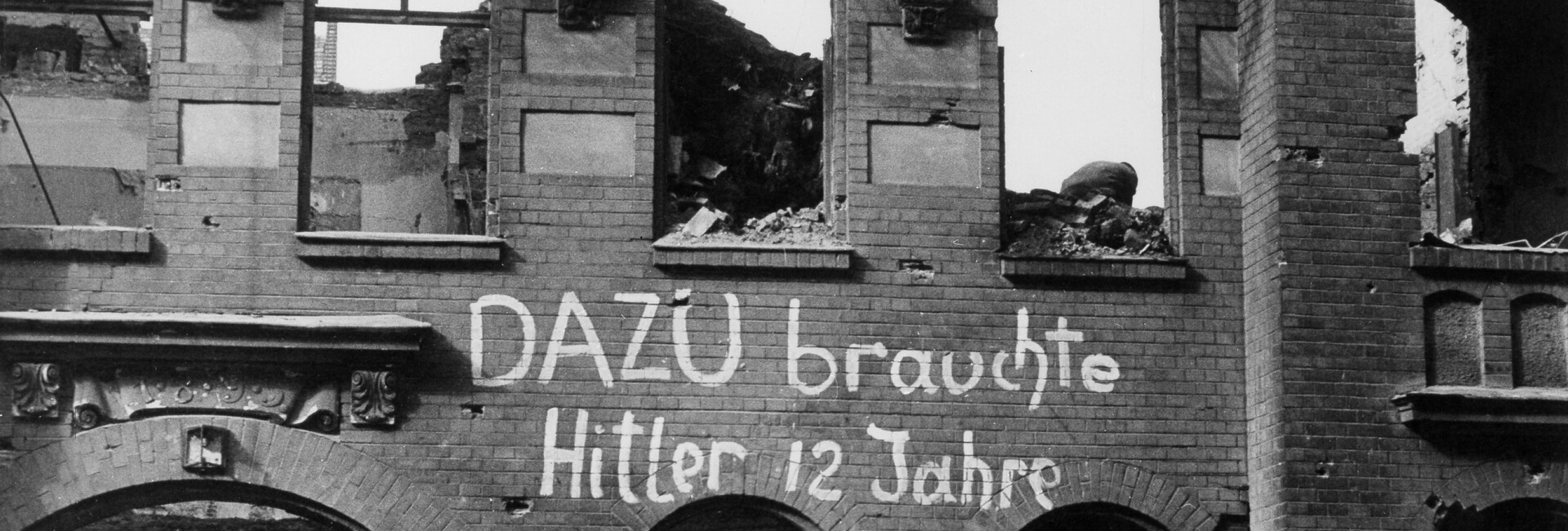
This entire rise and fall can be seen in thirty photographs, sourced from archives around the world. The exhibition is also supported by video material. Somers and Kok visited archives from Berlin to Washington in their search for the photographs that ultimately made up their selection.
Many political leaders after Hitler have followed this approach and used modern media in an attempt to achieve similar effects. Not always with the same “success”, if that is the right word. It is up to visitors themselves to draw connections between then and now. To do so, all you really need to do is follow the news. There are examples enough.